
Two books bracket the story of American air power in the modern era, and together they almost tell the whole story.
The first is Rise of the Fighter Generals: The Problem of Air Force Leadership, 1945–1982, published in 1998 by Col R. Michael Worden. Using career data on every Air Force four-star general across four decades, Worden traces how the bomber pilot, who built the service, wrote its doctrine, and held its senior leadership through the early Cold War, was methodically displaced by the fighter pilot. His conclusion is not flattering: the fighter pilot didn't rise because he was better. He rose because technology placed him at a decisive inflection point, and he was shrewd enough to institutionalize that position before anyone noticed what was happening. By 1982, when the first of a continuous string of fighter-pilot chiefs of staff was selected, the takeover was complete. Fighter pilots were roughly seven percent of all Air Force officers and commanded more than seventy percent of major commands.
This is, to be fair, what you'd expect. The fighter aircraft came to dominate air operations, and it makes sense that fighter pilots would lead a fighter-centric force, just as bomber pilots led the bomber-centric force before them. The conspiratorial read of this story is attractive and certainly fighter pilots will tend to promote fighter pilots but it's a distraction from the more interesting question of what happens when the technology shifts again.
The second book is Tomorrow's Air Force: Tracing the Past, Shaping the Future (reviewed here by Air University), published in 2013 by Col Jeffrey J. Smith, commandant of the School of Advanced Air and Space Studies. Smith picks up where Worden left off: the fighter-operations perspective now dominates the institution so thoroughly, in organizational structure, promotion criteria, and cultural identity, that the Air Force has built itself in the fighter pilot's image. The problem, Smith argues, is that this image is increasingly misaligned with the actual demands of modern warfare. The dominant capabilities now required don't come from the cockpit. They come from ISR, space, cyberspace, and — explicitly — unmanned systems. Smith predicted a new dominant perspective would emerge within two decades.
That prediction is due and the evidence suggests it's arriving on schedule.
The same dynamics that elevated the fighter pilot over the bomber pilot are now elevating unmanned systems over the fighter pilot — culminating, to my eye, with the 1992 merger of SAC and TAC into ACC, a bureaucratic reshuffling whose partial reversal for the nuclear mission did little to restore the bomber community's former standing. Not unmanned system pilots, mind you. There is still genuine ambiguity about who will lead the future Air Force, but the technology arc that Worden and Smith traced is stronger than ever, and air forces around the world are slowly reorganizing themselves around it. Considered as a whole, the current technology stack points in one direction → the fighter pilot's displacement is underway.
How the Fighter Pilot Won
To understand what is ending, it helps to understand how it began.
The bomber pilot dominated American air power through World War II and into the early Cold War because both offensive and defensive technology lacked the precision to assure mission success with limited assets. Air forces therefore relied on mass and the accuracy of a strike was a function of how many aircraft you put over a target. Curtis LeMay built Strategic Air Command in this image, and it dominated Air Force culture and resources for nearly two decades. The bomber was the point, so bomber pilots led.
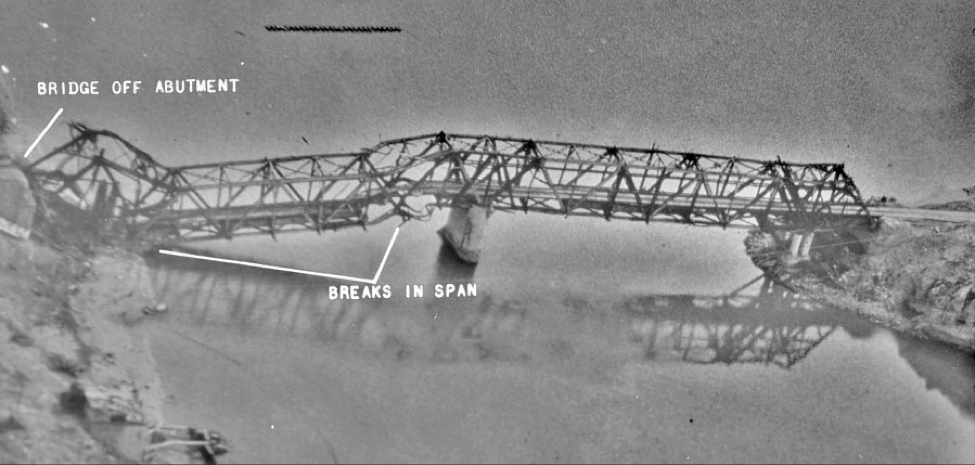
While bombers flew extensively during the conflict, the Vietnam War began to undo that culture. Operation ARC LIGHT produced some of the heaviest bombing campaigns in history, but the targeting problem exposed the limits of unguided munitions with painful clarity. For instance, the Thanh Hóa and Long Biên bridges absorbed hundreds of sorties and remained standing. In a politically constrained conflict demanding minimal collateral damage and controllable escalation, the massed bomber raid was both militarily ineffective and politically reckless.
The laser-guided bomb is the real hinge point of this story. The first Paveway bombs arrived to frontline combat forces in 1968. The fighter pilot, in his nimble aircraft, could now deliver a single precise strike that was not only tactically successful but politically viable. The tactical fighter community demonstrated in combat that precision mattered more than mass, and in doing so placed itself at the decisive point of the air war. By Worden's account, the fighter community rose through the ranks on the credibility it earned over Hanoi, institutionalized its dominance through the 1970s, and completed the takeover of Air Force senior leadership by 1982.
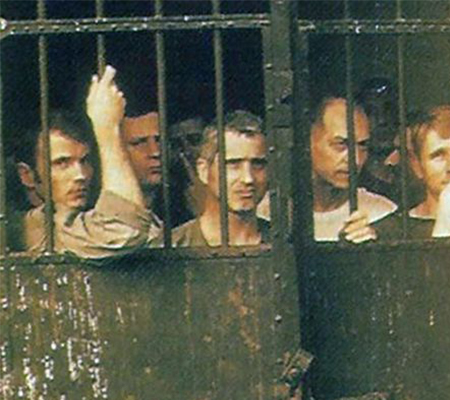
But the combat victories don't fully explain the rise. There's another element that rarely gets named plainly. In military institutions, decision authority tends to follow risk. The person most likely to die as a consequence of a decision has a moral claim to make that decision, one that no rank or title can fully override. When bombers flew unescorted deep into Germany, their crews absorbed catastrophic losses and their commanders held the cultural weight of the institution. When fighters became the only platforms that could reliably hit defended targets, they began to assume the lion's share of risk and, with it, the moral authority.
 Source: The American Heritage Museum
Technology is now quietly dismantling the fighter-led architecture. When the aircraft is unmanned, no one dies if it gets shot down. When the targeting decision is made by an analyst reviewing an AI-derived target nomination from a console in South Carolina, the personal physical stakes are zero. Ten years ago, unmanned aircraft were already flying over Syria, Yemen, and Iraq when the surface-to-air picture was too hot for fighters — some were specifically used to goad SAM systems into radiating as far back as the Second Iraq War. The fighter pilot was being protected from situations too politically costly to risk losing him.
The moral authority that organized military decision-making for generations — he who risks the most has the final say — is dissolving and what replaces it is unclear. What is clear is that the fighter pilot's claim to institutional authority is not purely about competence.
The Technology Stack
No single technology is the midwife of this change. A convergence of capabilities is eliminating, one by one, the functions we previously believed required a pilot in the cockpit. Individually, each development is significant. Together, they're decisive.
Unmanned Airframes
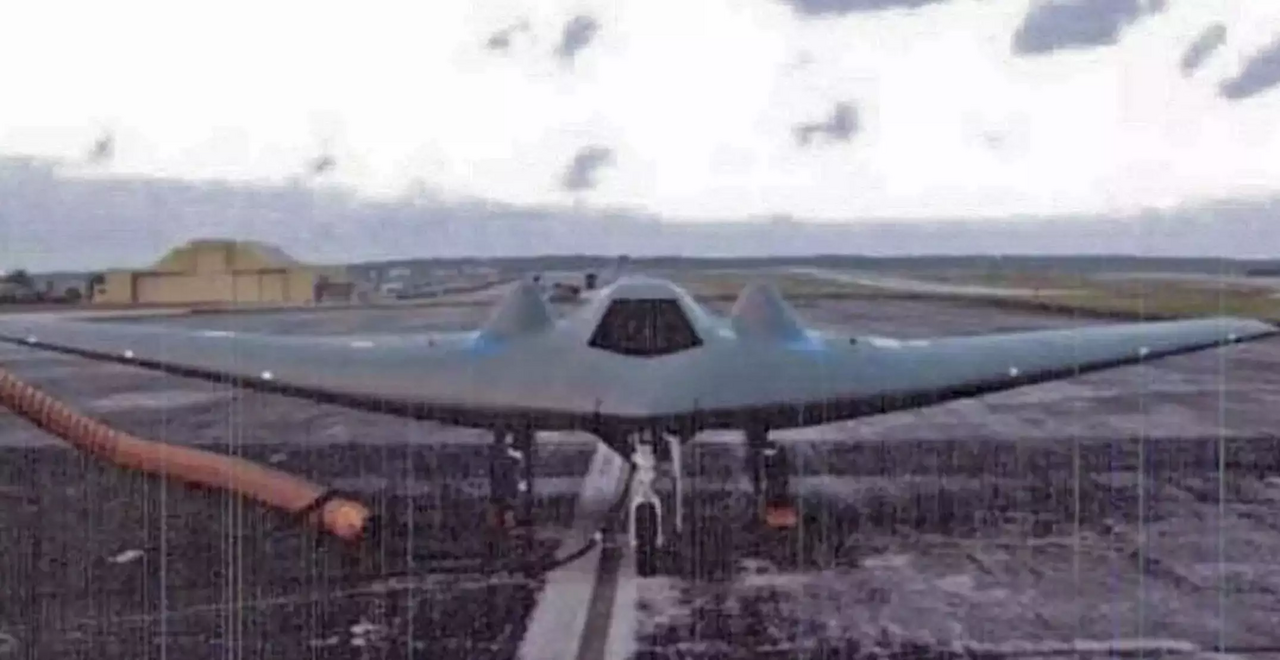
The history of unmanned flight runs from the Kettering Bug through World War II's Operation Aphrodite, the Ryan Model 147 during Vietnam, the birth of the MQ-1 Predator, and now to sophisticated stealth platforms. The airframe no longer requires a human. Lockheed's Skunk Works, the same organization that produced the U-2 and SR-71, produced the RQ-170 Sentinel, a low-observabtle flying wing that has operated across multiple theaters likely since the late 2000s. Northrop Grumman, builder of the B-2 Spirit, is credited by open-source analysts with the RQ-180, a larger and more capable successor. The Air Force has declined to acknowledge its existence for years, despite budget documents, aerial silhouettes, and recent daytime photos taken in Greece making it obvious. Northrop is now also building the B-21 Raider and designed around "optional manned operation," a careful phrase that means the infrastructure for removing the pilot is already built into the aircraft.
These are sophisticated, low-observable platforms likely carrying sensor payloads of extraordinary capability. Whether they are armed remains unclear — though the optionally-manned B-21 certainly will be.
Data Links and Point-and-Click Control
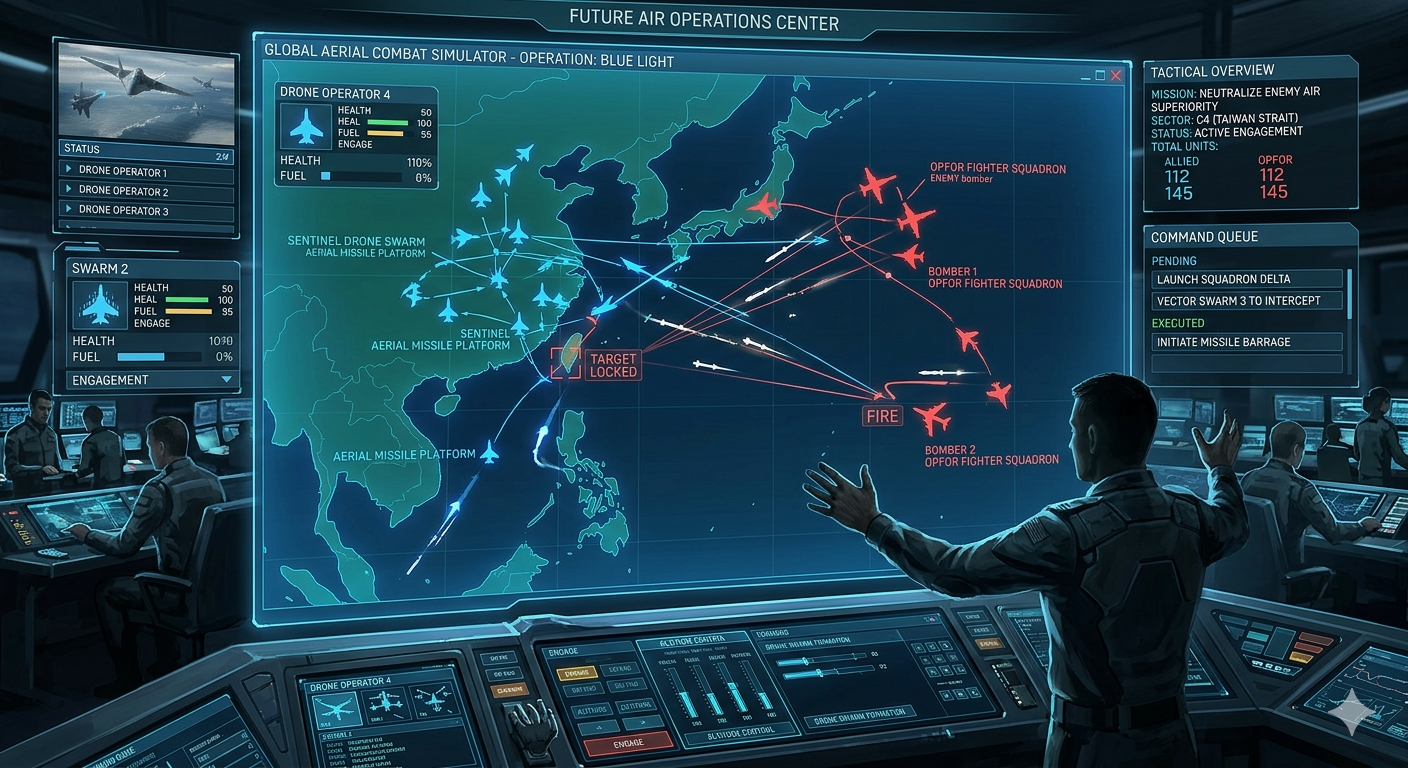
When the human left the cockpit, he merely relocated to a console. Modern remotely piloted aircraft are controlled through data links carrying full-motion video, signals intelligence, and precision sensor data to ground stations in real time, with command inputs returning to the aircraft. The interface can be stick-and-rudder, but it's increasingly point-and-click, as in the RQ-4. The skill set required has more in common with systems operation than traditional aviation in any recognizable sense. (StarCraft is a more honest metaphor than Top Gun.)
The obvious objection to this model has always been the data link — cut it, and the aircraft is blind or uncontrolled. Jamming a geosynchronous communications satellite was a real and credible threat. The proliferation of low earth orbit satellite constellations is changing that.
Starlink and its successors distribute communications across thousands of satellites simultaneously, frequency-hopping across a mesh that cannot be neutralized by targeting any single node. The traditional electronic warfare answer — find the link, break the link — is becoming geometrically harder as the link becomes a network rather than a pipe. Latency is falling, too, which has benefits I'll highlight later.
The data link vulnerability, long the most credible technical argument for keeping a human in the cockpit, is closing. The future fight over this shifts toward space control and network-centric warfare, a different class of problem and a harder one, but no longer a reason to conclude that human presence in the cockpit is irreplaceable.
Precision Munitions
The laser-guided bomb made the fighter pilot dominant by proving precision mattered more than mass. That was the first generation. What followed is a progressive decoupling of precision from anything the pilot contributes.
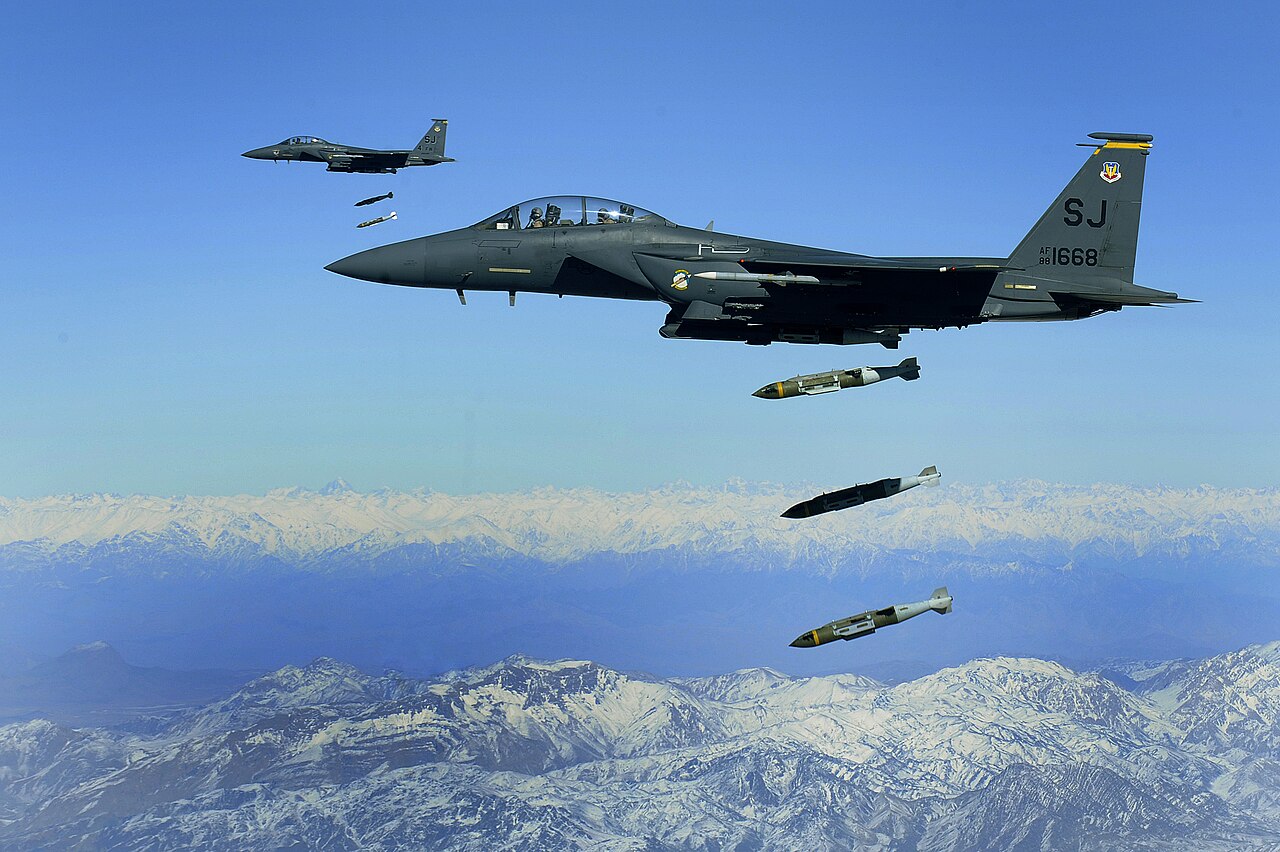
GPS-aided munitions removed the requirement for a designating aircraft to hold a laser spot on the target, eliminating the weather and geometry constraints that laser guidance imposed. Laser JDAMs fused GPS and laser guidance into a single weapon. Millimeter-wave radar seekers added the ability to autonomously discriminate and home on targets in GPS-degraded environments, without human input after release. Brimstone and the Joint Air-to-Ground Missile combine all three: GPS mid-course, laser terminal, and a millimeter-wave autonomous seeker, packaged into a weapon capable of selecting its own aim point from a basket of targets, discriminating vehicle type, and striking without further human guidance. Weapons are no longer just smart: they're beginning to discriminate on their own.
The fourth mode is arriving now, and it's the most consequential: passive electro-optical and infrared guidance, increasingly backed by onboard computing powerful enough to match visual and thermal signatures against a target library in real time. A weapon built around this model needs no GPS signal, no laser designation, no radar return, and no active emissions that could be detected, jammed, or spoofed. The range, resolution, and discriminating intelligence of modern seekers are reaching the point where electro-optical guidance is becoming viable across roles that previously demanded radar or human designation.
There's a consequence the military aviation community hasn't fully reckoned with: stealth is growing less useful in a world less reliant on radar guidance. Low-observable design was engineered to defeat radar cross-section, to make an aircraft invisible to the emissions that radar-guided weapons depend on. It was never designed to defeat a passive seeker hunting a heat signature or a visual profile. As guidance technology shifts, the stealth advantage narrows. The most expensive attribute of the platforms at the high end of this argument is becoming less decisive against the weapons emerging at the low end.
Autonomous Aerial Refueling
Endurance is among the most decisive advantages unmanned platforms hold over manned counterparts. The MQ-9 Reaper already flies 22-hour missions at a tempo no human crew could sustain, and that has been routine for years. Autonomous aerial refueling removes even the remaining ceiling. An unmanned platform that can refuel in flight is constrained only by mechanical wear — not biology, not crew rest requirements, not cockpit habitability.
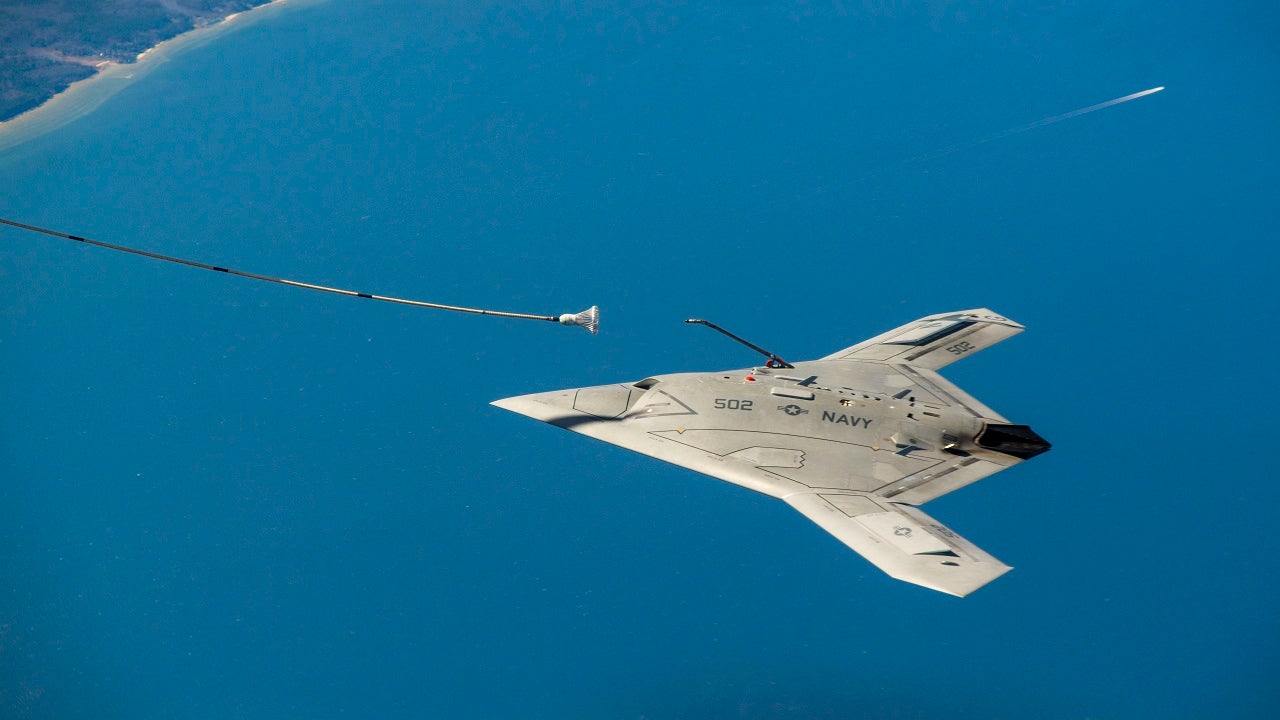
The Navy's X-47B demonstrator validated autonomous aerial refueling from a tanker, a maneuver long considered among the most demanding tests of pilot skill, performed here without a pilot. The MQ-25 Stingray, now in production, is a carrier-based unmanned tanker designed specifically to extend the persistence of other aircraft.
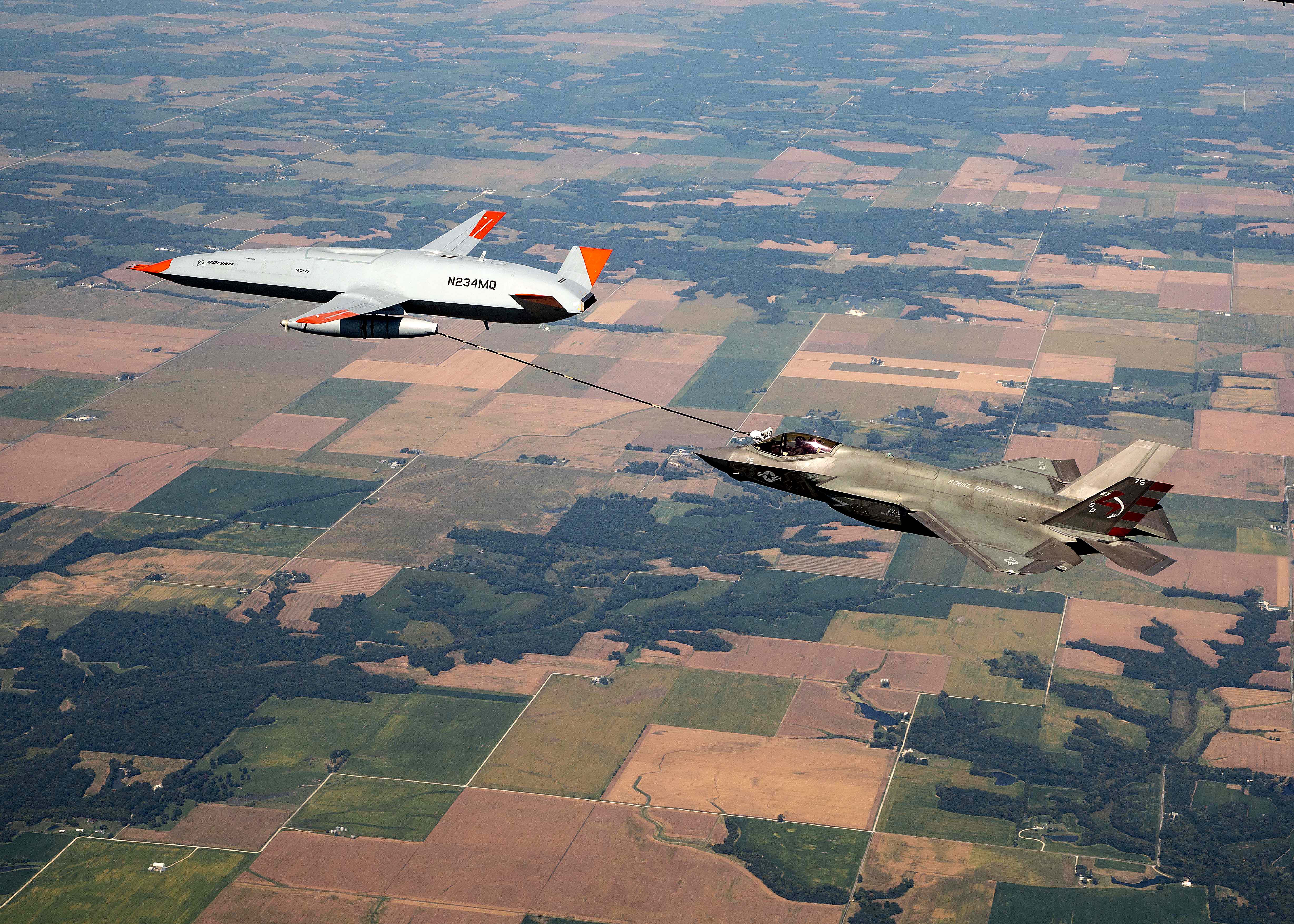
If the carrier-based autonomous refueling platform seems like a special case, consider that NASA and DARPA solved the same problem in 2006 with considerably less fanfare. An F/A-18, configured to fly unmanned, used GPS-based relative navigation and an optical tracker to chase a probe into a tanker basket over the California desert. Nine research flights, two successful plugs on the final sortie. When it missed, the test report described the receiver retreating from the drogue in a "controlled, safe, and predictable manner" — bureaucratic flatness doing a lot of work there. What they're describing is a machine that recognized the miss and recovered correctly with no intervention required.
The maintenance argument reinforces the endurance case in a way that rarely gets discussed. Jet engines accumulate stress unevenly. The highest-stress events are startup, shutdown, and large throttle excursions, the power changes that accompany takeoff, combat maneuvering, and landing. An unmanned aircraft that refuels in flight and orbits at a steady altitude avoids most of those cycles. The engine runs longer between overhauls, the airframe accumulates less fatigue per flight hour, and the economics of continuous coverage improve substantially. A human crew cannot match this.
AI-Enabled Targeting
Persistent platforms produce persistent data streams, and that creates a processing problem human analysts cannot solve at operational tempo. The volume of full-motion video and signals intelligence that continuous unmanned operations generate exceeds what any human analytical process can usefully absorb in time. Watch this demo of Project Maven:
Project Maven, the Department of Defense AI targeting initiative developed commercially by Palantir among others, exists to close that gap. It ingests sensor feeds, correlates them against pattern-of-life analysis and geospatial data, and surfaces target nominations faster than human analysis can produce them. The human remains in the loop, but the role has fundamentally changed: from analyst to auditor, from decision-maker to approval authority. Whether high-speed oversight of that kind constitutes "meaningful human control" under the Laws of War is an unresolved question, and not a trivial one.
This is the beginning of the kill web, a concept the Air Force has discussed for years that is now becoming operational architecture. A kill web is a network of available sensors and shooters, continuously mapped and cross-referenced, through which an AI system identifies not just a target but the optimal available asset to strike it, the recommended course of action, and the predicted effects — before a human analyst has finished reading the first intelligence report. Maven and systems like it aren't accelerating the existing kill chain. They're replacing its architecture. The analyst's role shifts from assembling the chain to auditing the kill web's recommendations. The individual pilot's judgment, which once sat at the center of that chain, now sits at its periphery.
The Collaborative Combat Aircraft
The Air Force's Collaborative Combat Aircraft program belongs in this stack, because it reveals something important about where we actually are in the transition. The CCA is an unmanned combat aircraft designed to fly alongside manned fighters — the loyal wingman. To understand why it's built that way, you have to understand the sensing problem it's trying to solve.
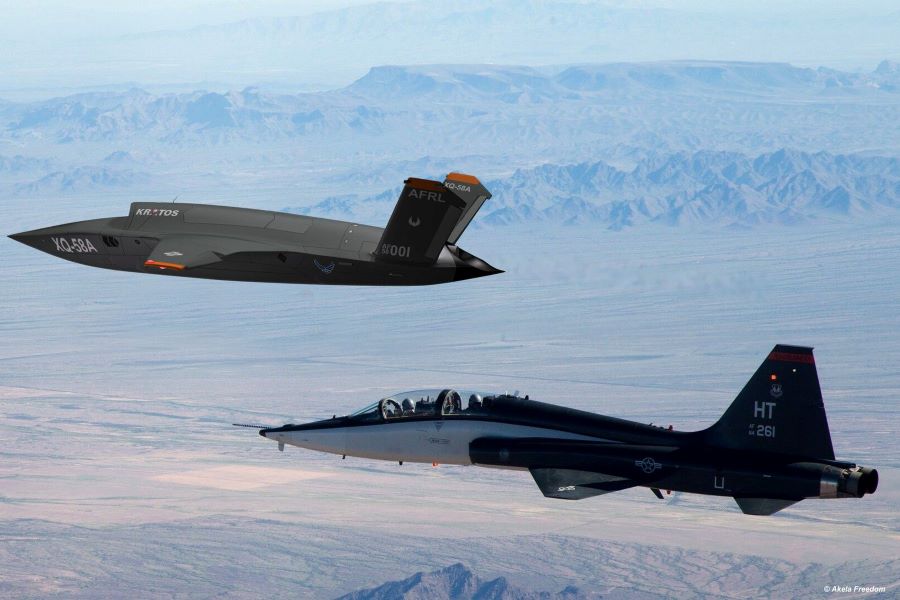
The fundamental challenge of beyond-visual-range air combat is sensing: to kill a fighter before the merge, you need a radar accurate enough to generate a targeting-quality track at distance. Long-range radars have range but not resolution. The resolution you need is available in the fighter's nose but necessarily comes at the cost of range. And your missiles need to range out to the edge of that radar's useful resolution. Weapons like the AIM-260 JATM are in development, but "in development" is not "fielded." In the meantime, you close the gap by moving the launch point closer to the target: a low-observable, remotely controlled platform pushed forward until a shorter-range missile can reach what the radar can already see.
Which is where the questions begin to stack up. Can you put a radar on that forward platform capable of a targeting-quality track? Maybe. Do you have the bandwidth to get that data back to a decision-maker in time? Can you do it without emissions that betray a platform whose value is that it's hard to find? Each answer unlocks the next question. The manned fighter, sitting in the threat envelope with its own radar and its own trigger, sidesteps most of them at once.
Space-based MTI is coming for this gap, too. The Space Force's new Objective Force document, released at last week's Space Symposium commits to fielding Moving Target Indication systems that "directly enable lethal fires in all domains" — with second and third generation systems planned before 2035. When a satellite can hand a targeting-quality track directly to a shooter, the fighter's radar aperture stops being the irreplaceable link in the chain.
AI in a Dogfight
A reasonable objection surfaces at this point. Fine — ISR, refueling, targeting. Those are support functions. But what about the dynamic, high-G environment of visual-range air combat — the merge — where human instinct, situational awareness, and split-second judgment have always been considered irreducible? Surely that's where the pilot remains essential.
This was a defensible position until recently.
In 2020, DARPA's Alpha Dogfight Trials pitted an AI agent against an experienced F-16 pilot in simulated dogfights. The AI won every engagement. Its energy management, targeting geometry, and trigger discipline were superior because its OODA loop was effectively instantaneous. The simulation fed the AI omniscient awareness of both aircraft's position and vector, a legitimate caveat. But the AI-piloted sim also rode the razor's edge of G limits continuously, achieving turn radii the human couldn't match. Energy management and turn radius are paramount in the visual fight, and the AI had the advantage in both.
Worth noting: the human in that trial wasn't subject to G-load either. He wasn't graying out or managing the physical demands of sustained maneuvering. His performance was probably better than we could expect in an actual cockpit — and he still lost 5-0. Many other Air Force pilots have flown against different AI agents and met similar results. Some are set to fly against Project VENOM, an actual AI-piloted F-16, later this year.
Some of this has already moved out of the simulator. The VISTA X-62A, a modified F-16D operated by DARPA and the Air Force Test Pilot School as an AI testbed, flew actual maneuvering engagements with AI in control against a human-piloted aircraft and "won." The same platform separately demonstrated strafing accuracy exceeding what a human pilot could reliably achieve. That result deserves more attention than it has received, because the fighter pilot's claim to irreducible value is most often located precisely there: in the precision of his weapons employment.
The demands of air combat are real and the humans who meet them are genuinely exceptional. What the evidence now suggests is that exceptional isn't good enough, because the systems competing against pilots don't share the biological constraints that make those demands difficult. An AI doesn't gray out and doesn't fixate. It doesn't get slower in the third hour of a high-workload engagement and it doesn't carry ego into the merge.
Betting on the Future
No single thread in this stack is decisive on its own. Each represents a capability that has been demonstrated, fielded, or funded — but the stack as a whole describes a force structure, and the money is starting to say so plainly.
The Department of Defense's FY2027 budget request asks $54.6 billion for the Defense Autonomous Warfare Group, an organization stood up in 2025 to rapidly field AI-enabled, attritable autonomous systems at scale. This is a 24,000 percent increase over DAWG's $225 million inaugural budget in FY2026. Measured against the Air Force's requested $264 billion, that might look like a modest bet until you set it next to the $52.8 billion requested for the entire United States Marine Corps in the same cycle.
Some thoughtful voices inside the Air Force, officers with genuine operational credibility, have urged caution, arguing that perception systems, training data, and adversarial vulnerabilities make the pivot to full autonomy premature. The concern is reasonable. AI can be brittle against novel threats, and a human's edge may lie precisely in the edge cases a machine was never trained for. But caution in this context is largely beside the point.
Game theory forecloses the option of slowing down. China is not waiting for the Air Force to resolve its institutional ambivalence. Russia is not pausing its drone development pending a Pentagon risk assessment. If the United States pulls back from this transition, it doesn't stop the transition — it cedes the leading edge to adversaries who will then use it against us.

The real strategic problem is not whether to proceed. It's how to manage the resource demands of running two force structures simultaneously: enough legacy manned capability to fight a peer conflict today, while funding the autonomous systems that will be decisive tomorrow. This has the structure of a Martingale bet: keep doubling down on the transition and you eventually win decisively; miscalculate the timeline or the budget, and you arrive at the future fight with neither the old capability intact nor the new one ready. The fighter pilot's displacement is inevitable, but bankrupting the force in the process is unacceptable.
Beyond the Horizon
What's already visible on the next horizon is something more disruptive, and it's the subject of George M. Dougherty's recent book Beast in the Machine: How Robotics and AI Will Transform Warfare and the Future of Human Conflict. Dougherty argues that the convergence of universal precision and self-organizing autonomous systems is producing a battlespace where coordinated mass, not crewed performance, is the decisive variable.
The central lesson of precision-guided munitions wasn't merely that accuracy improved — it was that precision changes the economics of warfare. When a single aircraft can reliably hit a single target, you no longer need formations. When formations are no longer required, the mass that defended those formations (fighter escorts, jamming aircraft, suppression packages) becomes less necessary too. Precision doesn't just improve the weapon; it collapses the force structure that was built around the weapon's imprecision. As the mass requirement falls, so does the cost threshold for delivering it.
In 2020, the Azerbaijani and Armenian war over Nagorno-Karabakh lasted forty-four days and ended in decisive Azerbaijani victory. (Admit it — you had to look up where it is.) The margin wasn't advanced fighters or sophisticated air defense suppression packages. It was Bayraktar TB2 drones and Israeli-designed loitering munitions that circled above Armenian armor until it moved, then dove into the precise weak points that decades of tank design had failed to adequately protect. Precision strikes at scale, on video, conducted by systems that cost a fraction of what they destroyed. Armenian armored formations representing years of national investment were eliminated in days, and every military on Earth watched it happen in near real-time.
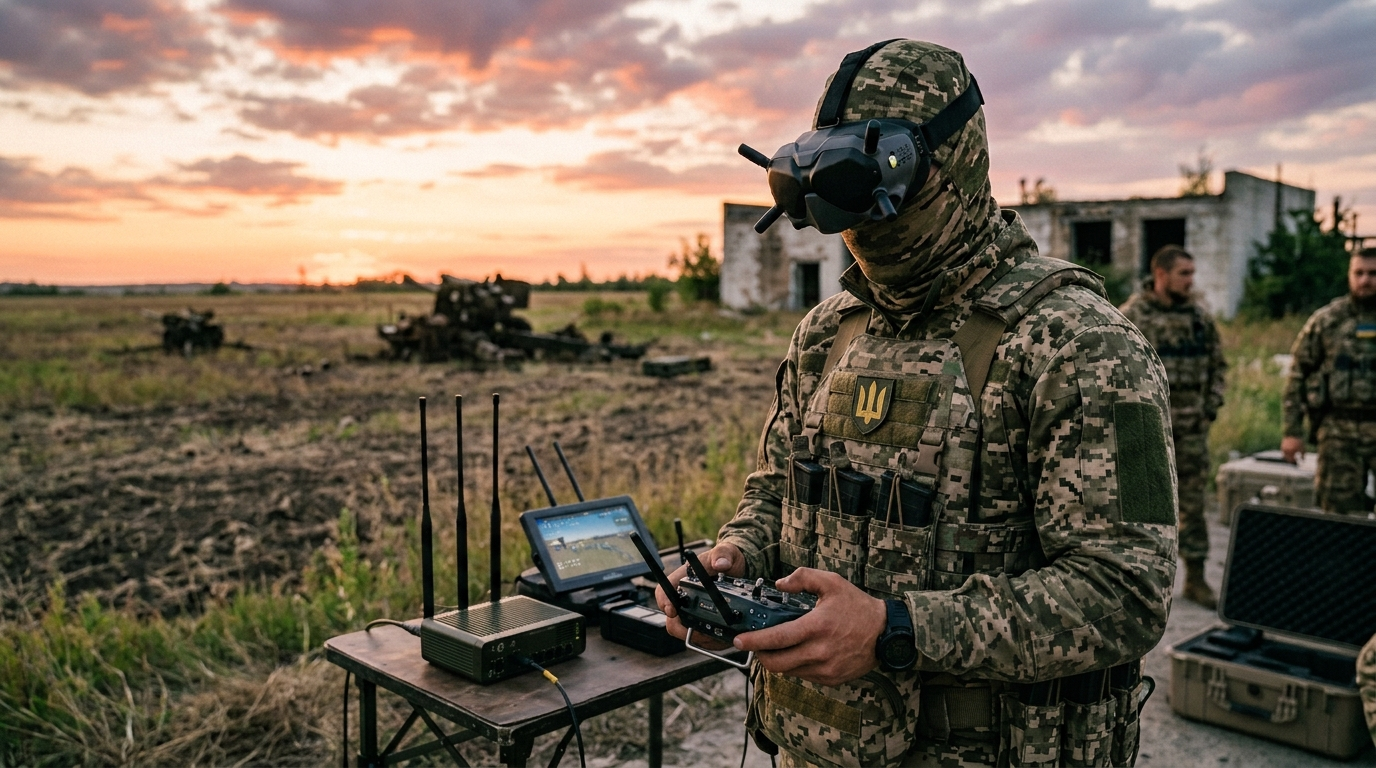
Ukraine has accelerated every trend Nagorno-Karabakh revealed. Small FPV drones are finding the engine decks and crew hatches of Russian tanks with a regularity that would have been impossible without precision. The logic is identical to the Paveway over Thanh Hóa: find the weak point, hit it exactly, and mass becomes irrelevant. The difference is that the Paveway required an F-4 and a trained crew. The FPV drone requires a commercial battery, a camera, and a determined operator. Ukrainian teams conduct strikes that would have required a dedicated strike package a generation ago, coordinated over encrypted messaging applications and guided by commercial satellite imagery. Iranian-designed Shahed-136 loitering munitions — roughly the cost of a used car — are launched in swarms designed to exhaust air defense systems that cost orders of magnitude more per intercept. A single unpredictable drone in the approach path to an airfield can shut down flight operations for hours with no direct engagement required.
The technological and financial barrier to effective aerial precision attack has collapsed. As precision improves further, the mass requirement continues to fall — fewer aircraft, fewer pilots, fewer support personnel, less logistical infrastructure, less political will required to absorb casualties. A swarm of software-guided munitions doesn't file a mishap report. It doesn't require a survivor benefits package.
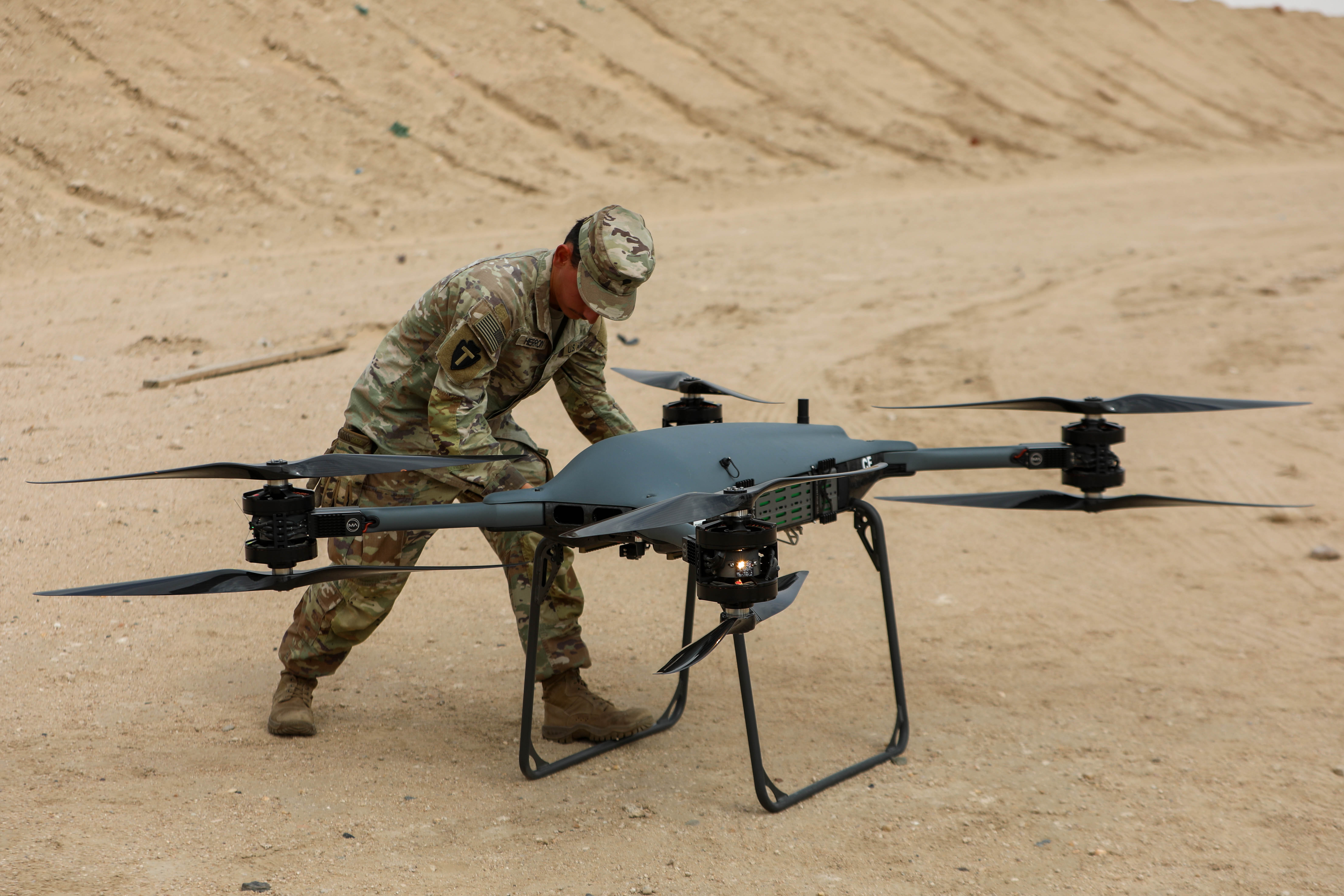
We are fooling ourselves if we think the fighter pilot survives this arc. The precision revolution that created his dominance over the bomber pilot is the same one eliminating him.
Why the Institution Holds On
Smith noted in Tomorrow's Air Force that a retired general who read his manuscript disagreed so completely that he refused to engage with its findings at all. That refusal is what institutional capture looks like. Worden showed that the bomber community lost its institutional dominance without ever quite understanding why — the data was there, the operational evidence was accumulating, but the institution processed it through filters built by and for the people whose position was eroding.
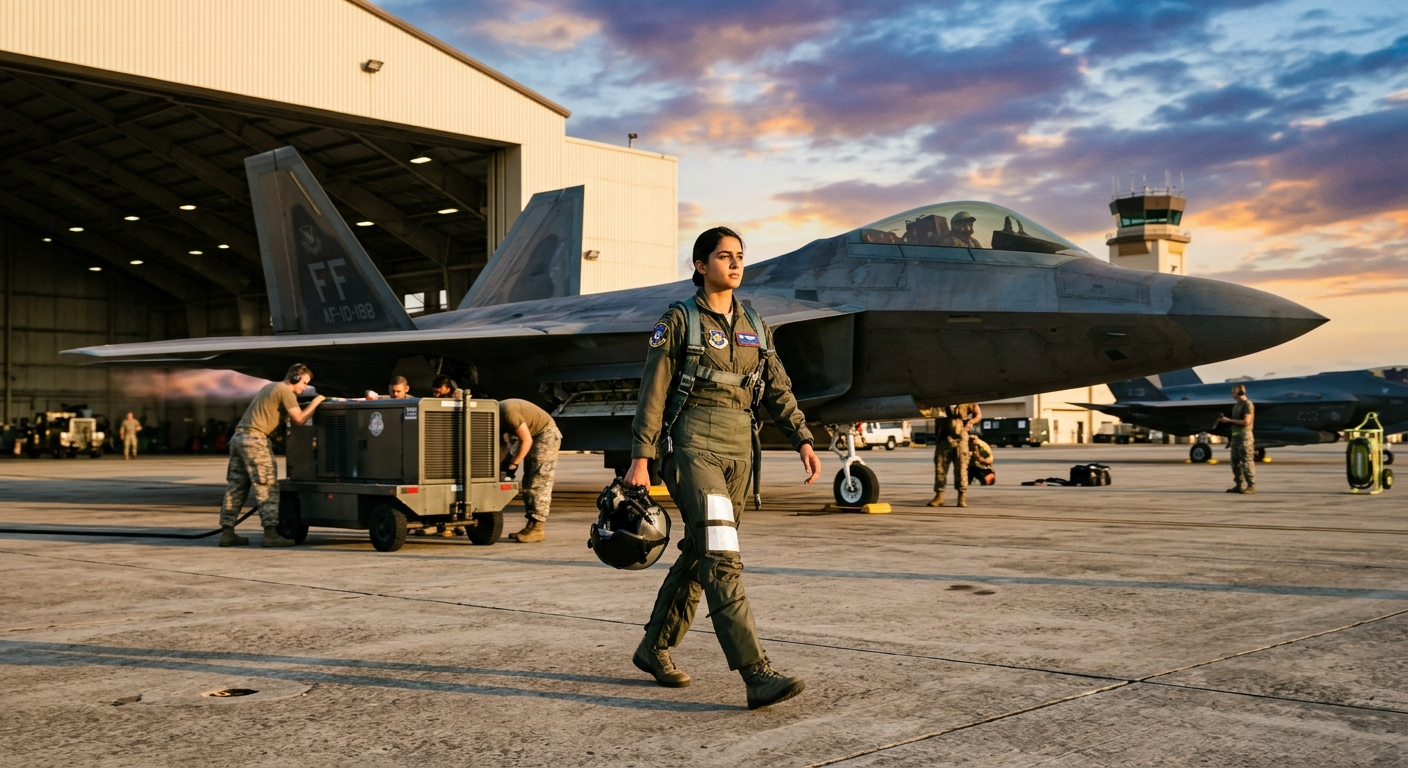
The fighter community is now in an equivalent position, with some cracks beginning to show. In 2018 the Air Force created the 13O AFSC, the Multi-Domain Warfare Officer, to produce a cadre of officers trained to plan and execute command and control across multiple warfighting domains simultaneously. A group commander recruited me for it that year. I was genuinely considering it until my squadron commander's response: "hell no." He and I both knew that staying in a community whose future senior raters would know my name and my work was the rational career move. Four years later the Air Force phased the specialty out. The rationale, offered by then-Chief of Staff Gen. CQ Brown, was that multi-domain expertise was "too critical to confine to a single career field" — a reasonable position on its face. The intent was to make multi-domain competency a universal standard.
What institutions almost always fail at, however, is adjusting their incentive mechanisms to match their stated aspirations. In any military service, the mechanism that matters most is promotion. It's the clearest signal of what the service actually values. The only inputs to the promotion boards that really move that needle are the senior rater stratifications: first of six, top one percent. Those stratifications originate with senior raters who came up through the cockpit-centric hierarchy — and they tend to recognize what they know.
A multi-domain-capable officer whose senior rater cannot articulate what that capability is worth produces an honest but undifferentiated record — and an undifferentiated record is a non-select, regardless of future value to the service. So the organization stays locked in its current structure, selecting for what it has always selected for, until the outside pressure of operational reality makes the cost of that choice impossible to ignore.
So What?
The displacement of the fighter pilot is the primary subject of this piece, but it's only part of a larger story: whether meaningful human agency in warfare survives the convergence of cheap autonomy, AI-enabled targeting, and mass attritable systems at all. Military institutions, policymakers, and ethicists are trying seriously to engage that question, but the harsh reality is that the tools we invent eventually dictate how we fight, regardless of how long the institutions that predate them hold on.
A force that can fight without bleeding removes the most powerful natural brake on the use of violence: the human cost of flag-draped coffins and pilots who don't come home. Bloodless airpower will become dangerously easy for policymakers to reach for — there is a strong argument it already is, which means the moral education of future commanders is not a future problem. Tomorrow's Air Force will be capable of projecting violence with a political frictionlessness that no previous generation of commanders has had to manage. Understanding data links and algorithms is the easy part. Understanding the moral hazard of projecting violence with diminishing political consequence — that problem has no technical solution, and it's the harder one.
I am a U.S. Air Force Lieutenant Colonel with experience in unmanned aviation, computing, international defense policy, and security cooperation. And I genuinely like the em dash. It's here on purpose. The views expressed are my own and do not represent the Department of the Air Force or the United States Government.